Crown thinning in Ilford
If you’re looking for crown thinning in Ilford, you’re probably dealing with a tree that has become too dense, too heavy, or simply too dominant for its setting. In many local gardens and commercial spaces across Ilford, trees grow beautifully for years and then start to block light, collect wind, shed excessive debris, or crowd out nearby planting. Crown thinning is one of the most effective ways to improve that situation without losing the natural shape of the tree.
This service is especially useful for homes and businesses in areas where trees need to sit comfortably alongside fences, outbuildings, pathways, driveways, neighbouring properties, and overhead space. Whether you have a mature maple in a front garden, a broad cherry tree in a rear plot, or mixed planting around a commercial site, careful thinning can make a noticeable difference. It can help restore balance, reduce strain on limbs, and improve airflow through the canopy while keeping the tree looking healthy and well cared for.
Local customers often ask for crown thinning because they want a practical result: more light, less resistance to wind, a tidier appearance, and a tree that works better with the property around it. Done properly, it is a precise arboricultural service, not a drastic cut. The aim is to selectively remove some smaller branches throughout the crown so the tree remains structurally sound and visually natural.
What crown thinning means for Ilford properties
Crown thinning is the selective removal of small, live branches from within the tree’s canopy. It is not the same as reducing the overall height or “topping” the tree. Instead, the process is carried out carefully to allow more light and air to pass through the crown while retaining the tree’s original outline. This makes it a popular option for people who want a healthier, more manageable tree without an overly obvious reduction in size.
In Ilford, tree work often needs to account for a mix of property types. You’ll find traditional terraced homes, semi-detached properties with modest gardens, larger suburban plots, schools, retail premises, office spaces, and shared residential developments. In each setting, dense tree crowns can create different problems. They may shade gardens too heavily, block windows, interfere with solar panels, drop excess leaf litter, or make patios and driveways feel dark and enclosed. Thinning helps address these issues in a measured way.
It can also be a useful option where a tree sits near a boundary. If a crown is dense and overhanging a neighbour’s garden or driveway, thinning can reduce the feeling of enclosure and help improve relationships between nearby property owners. It is often a more acceptable solution than larger-scale pruning because it aims to keep the tree in place and simply improve how it grows within its surroundings.
Why people choose crown thinning
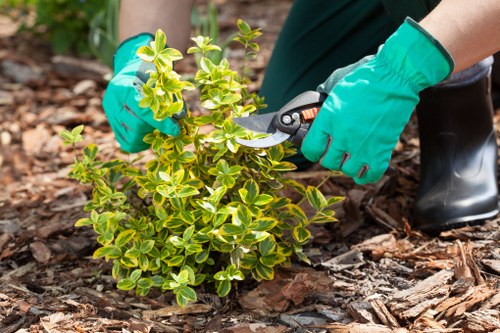
There are several common reasons customers request tree crown thinning in Ilford. Some are practical, some are aesthetic, and many are a mix of both. A well-executed thinning job can solve everyday annoyances while also improving the long-term condition of the tree.
Typical reasons include:
- More daylight for rooms, gardens, and outdoor seating areas
- Better airflow through the canopy, which can help reduce wind loading
- Less weight on heavy limbs and crowded branch unions
- A neater, lighter appearance without a harsh or overcut finish
- Reduced debris from overly congested branches and foliage
- Improved clearance around paths, roofs, driveways, and outbuildings
In some cases, thinning is chosen after a period of rapid growth. Trees that have not been maintained for several years can develop dense inner growth and crossing branches. This can make the canopy feel oppressive and can also increase the chance of rubbing, tear-out, or breakage during windy weather. By removing selected branches, the tree is allowed to breathe more naturally.
For customers who are concerned about preserving the character of a mature tree, thinning is often the preferred route because it avoids the heavy-handed look that can come from more severe reduction work. If you like the tree but want it to feel lighter, cleaner, and better suited to your space, this is usually the service to explore first.
How the service works
A proper crown thinning service begins with an assessment of the tree, its species, its condition, and the space around it. Different species respond differently to pruning, so a good arborist will look at the branch structure, the overall balance of the crown, any signs of stress or disease, and any nearby features that need protection. This is particularly important in built-up parts of Ilford where trees may be close to homes, parked cars, gardens, sheds, walls, or power lines.
The process is then planned around the desired outcome. A light thinning may be enough if the goal is to improve light without changing the tree too much. A more noticeable thinning may be appropriate for a large, dense crown that has become difficult to manage. The tree worker should remove branches strategically from throughout the canopy rather than from one area only, helping to preserve symmetry and avoid obvious gaps.
Most professional thinning work will also take care to keep pruning cuts clean and appropriate to the size of the branches being removed. The result should look natural, not clipped or patchy. Good crown thinning should be hard to spot from the street in the sense that the tree still looks like itself, just healthier and better proportioned.
What a careful team will usually consider
- The species and growth habit of the tree
- The amount of light currently being blocked
- Branch density in the inner canopy
- Signs of disease, weak unions, or storm damage
- Access for ladders, machinery, or rope work
- Nearby structures, vehicles, and planting beds
For customers who need the work done with minimal disruption, access planning is a big part of the job. In Ilford, parking can be limited in some residential streets, and rear garden access may be narrow or shared. A local team used to working in these conditions will usually plan the job so materials, tools, and waste removal are handled efficiently from the outset.
Benefits for homes, landlords, and businesses

Crown thinning brings benefits to many different types of customers. For homeowners, the most obvious advantages are improved light and a more pleasant garden environment. For landlords and property managers, it can help maintain a tidy, presentable exterior and reduce complaints about trees blocking windows or dropping too much material. For business premises, the right pruning can improve visibility, access, and the general appearance of the site.
In residential settings, people often notice how much brighter a room feels after the canopy has been professionally thinned. Even a modest increase in daylight can make a garden more usable and a home feel more open. This is useful for properties with mature boundary trees, where a dense crown may be creating a gloomy feel throughout the year.
In commercial settings, crown thinning can help maintain an inviting frontage and a safer environment around entrances, car parks, service yards, or staff areas. Trees that are too dense can interfere with lighting, obscure signage, or create constant leaf fall that becomes a maintenance burden. A lighter canopy can be easier to live with and easier to manage over time.
Common property types that benefit from thinning
- Front gardens with mature ornamental or broadleaf trees
- Rear gardens with boundary trees close to seating or lawn areas
- Rental homes where outdoor presentation matters
- Office grounds and retail forecourts
- Schools, nurseries, and community premises
- Apartment or housing association landscapes
Because each site is different, crown thinning should be planned to suit the property rather than applying the same approach everywhere. A tree beside a narrow terrace in central Ilford may need a different level of intervention compared with a larger specimen near a wider suburban plot or a business unit with open surroundings. The right method depends on the setting as much as the tree itself.
Why local knowledge matters in Ilford

Choosing a local team for crown thinning in Ilford can make the process smoother from the first visit to the final tidy-up. Local tree work often involves tight access, controlled waste removal, and practical awareness of the area’s mix of housing and commercial properties. A team familiar with the borough’s streets and property layouts is more likely to anticipate access issues, plan parking sensibly, and work efficiently around neighbours and busy pavements.
Ilford includes busy roads, residential side streets, and pockets of mixed-use development, so it helps to have a service that understands how to work carefully in live environments. A mature tree in a small garden may require rope-based access and delicate handling, while a larger site may allow faster movement and easier clearance. Local experience supports the right approach for each setting.
There is also value in having someone who understands how trees behave in urban environments. Pollution, compacted soil, limited rooting space, previous pruning, and competition from nearby structures can all affect the condition of a tree. A knowledgeable local arborist will take these conditions into account before recommending the amount of thinning needed.
What is included in a professional crown thinning service
When you arrange crown thinning in Ilford, you should expect a service that focuses on both the tree and the surrounding property. The exact package may vary, but a professional job is usually built around the same core elements.
These often include:
- Initial assessment of tree condition and canopy density
- Selective pruning to remove suitable branches from across the crown
- Attention to shape, balance, and natural appearance
- Controlled work around fences, sheds, walls, and planted borders
- Waste collection and removal from the site
- Final tidy-up so the area is left presentable
Some customers also ask for related work at the same time, such as deadwood removal, minor shaping, or selective clearance away from roofs and gutters. If a tree has several issues at once, combining the tasks can be more efficient than arranging separate visits. However, the tree should not be overworked; each cut should have a clear purpose.
It is always worth asking what will and will not be included before work begins. That helps avoid confusion and ensures the planned outcome matches what you want for the property.
What crown thinning is not
People sometimes confuse thinning with other forms of pruning. It helps to know the difference so you can ask for the right service and avoid disappointment. Crown thinning is not the same as lopping, topping, or severe reduction.
It is also not designed to make a tree dramatically smaller. If your main concern is height or overall spread, another pruning method may be more suitable. Thinning is best for controlling density, improving light, and reducing wind resistance while keeping the tree’s outline broadly intact.
A responsible tree service will explain whether thinning is the right choice or whether a different approach would suit the tree better. That honesty matters, because the healthiest outcome is not always the most aggressive cut. In many cases, less is more.
How to prepare for the visit
Preparation is usually simple, but a few practical steps can help the job run more smoothly, especially in areas where access is tight or parking is limited. If you live on a busy residential road in Ilford or near shared access points, a little planning goes a long way.
Helpful preparation checklist
- Move cars, bikes, bins, and garden furniture away from the work area if possible.
- Clear access to side gates, rear paths, or shared entrances.
- Let neighbours know if branches overhang their side of the boundary.
- Check whether pets should be kept indoors during the visit.
- Remove delicate items from patios, windowsills, or sheds close to the tree.
- Share any concerns about underground features, water butts, or recently installed structures.
If the tree is close to your house, it is also helpful to mention any known problems such as loose fencing, damaged paving, or fragile greenhouse panels. That allows the team to work with extra care in the most sensitive areas.
For commercial properties, it is wise to plan around opening hours, deliveries, staff access, and customer movement. A local team can often arrange the work to reduce disruption and keep entrances usable wherever possible.
Pricing factors customers should expect
While exact prices depend on the specific tree and site, it is useful to understand what tends to influence the cost of crown thinning. This helps you compare quotations in a meaningful way and choose a service that suits both the tree and the property.
Typical pricing factors include:
- The size and height of the tree
- The thickness and density of the canopy
- Species of tree and how it responds to pruning
- Access to the work area
- Whether rope access or specialist equipment is needed
- How much waste needs to be removed
- Any additional tree work requested at the same time
Tight access is a common factor in Ilford. Narrow side returns, limited off-street parking, and restricted rear access can all affect how a job is carried out. A team that understands these practical issues can often give a more realistic quotation after seeing the site or assessing photos. That is one reason local experience matters: it helps the service reflect the real conditions rather than a vague estimate.
If you are comparing options, remember that a lower figure is not automatically better if it means rushed work or a poor understanding of tree structure. With pruning, the quality of the cut and the judgement behind it matter just as much as the final appearance.
Areas covered around Ilford
Customers often need tree care not only in Ilford itself but also across nearby neighbourhoods and surrounding parts of East London. A local team can typically cover a broad area while remaining responsive to property-specific needs.
Common nearby locations include:
- Barking
- Seven Kings
- Goodmayes
- Gants Hill
- Redbridge
- Barkingside
- Woodford
- Manor Park
- East Ham
- Romford border areas
Whether the work is for a private garden, a school site, a residential block, or a commercial frontage, the same principles apply: careful pruning, clear communication, and a tidy finish. The benefit of a local company is simple—it is easier for them to understand the area, reach the site efficiently, and adapt to the conditions on the day.
When crown thinning may be the right choice
Not every tree needs the same treatment. Crown thinning is often suitable when a tree is generally healthy but overly dense. It works especially well where the owner wants to keep the tree, improve the environment around it, and avoid major changes to height or shape.
You may be a good candidate for thinning if:
- The canopy is blocking too much light
- The tree is catching strong winds and moving excessively
- There is too much internal branch congestion
- Leaf and twig drop is becoming difficult to manage
- The tree looks heavy or crowded compared with the surrounding space
- You want a more elegant appearance without heavy pruning
On the other hand, if a tree has major structural problems, disease, significant deadwood, or poor location issues, another solution may be more appropriate. That is why an honest assessment matters. The goal is not to prune for the sake of pruning, but to improve the tree’s condition and suitability for its setting.
Frequently asked questions
Will crown thinning damage my tree?
When carried out properly, thinning should not damage a healthy tree. The key is selective removal rather than excessive cutting. A skilled arborist will preserve the tree’s natural balance and avoid removing too much foliage at once.
How much light can I expect to gain?
That depends on the tree species, canopy density, and the amount of thinning carried out. Most customers notice an improvement in brightness and openness, especially in gardens and rooms that were previously shaded for much of the day.
Is crown thinning suitable for older trees?
Yes, provided the tree is assessed properly. Mature trees often benefit from careful thinning because dense canopies can place extra strain on branches and make the tree feel overwhelming in a residential setting.
Can thinning help in windy weather?
It can. By reducing canopy density, the tree presents less resistance to wind. This may help reduce movement and strain, although the outcome depends on the tree’s structure and the local exposure of the site.
Do I need permission before the work starts?
That depends on the tree’s legal status and location. Some trees may be protected, or the property may sit within a conservation setting. If there is any doubt, it is sensible to check before arranging work.
How often should a tree be thinned?
There is no single answer. Some trees may only need light work occasionally, while others in fast-growing or exposed locations may need more regular attention. The right interval depends on the species, growth rate, and how the tree is affecting the property.
Why choose a professional local company
Tree work is one of those services where experience really matters. A professional local company brings practical knowledge, the right tools, and a better understanding of how trees behave in built-up surroundings. That is especially valuable in Ilford, where properties can be close together and access is not always straightforward.
Customers usually want three things: a tree that looks good, a property that is left tidy, and a job that has been done safely and sensibly. A local team is more likely to understand the everyday realities behind those goals, from narrow driveways to shared boundaries and busy streets. They can also advise whether crown thinning is the best option or whether another form of tree care would suit the site better.
If you want a tree to feel lighter, healthier, and more manageable without losing its character, crown thinning is often the right choice. It can make a real difference to how your property looks and functions, while helping you keep mature trees in a way that feels practical and respectful.
Book your crown thinning service in Ilford
If your tree is becoming too dense, too shaded, or too difficult to manage, now is a good time to take the next step. A careful crown thinning service can improve light, reduce wind resistance, and create a cleaner, more balanced appearance that suits your home or business.
Whether you are a homeowner dealing with a large garden tree, a landlord maintaining a rental property, or a business owner looking after a frontage or shared site, crown thinning in Ilford offers a practical and attractive solution. The best results come from thoughtful pruning, local knowledge, and a clear understanding of what the tree and property need.
Contact us today to discuss your tree, request a free quote, or arrange a visit. If you are ready to improve your canopy and make your outdoor space feel brighter and easier to manage, book your service now.